
Joe Wolski, CTO

Putting Agentic Development to the Test

In our last story, we walked you through how Cyberthone 2026 came together – the cyberpunk theme, the missions, the AI-assisted judging. This time, we’re going deeper: sitting down with the teams who made it to the top three and hearing how they actually built their winning projects – all using nothing but Anthropic’s Claude Code.
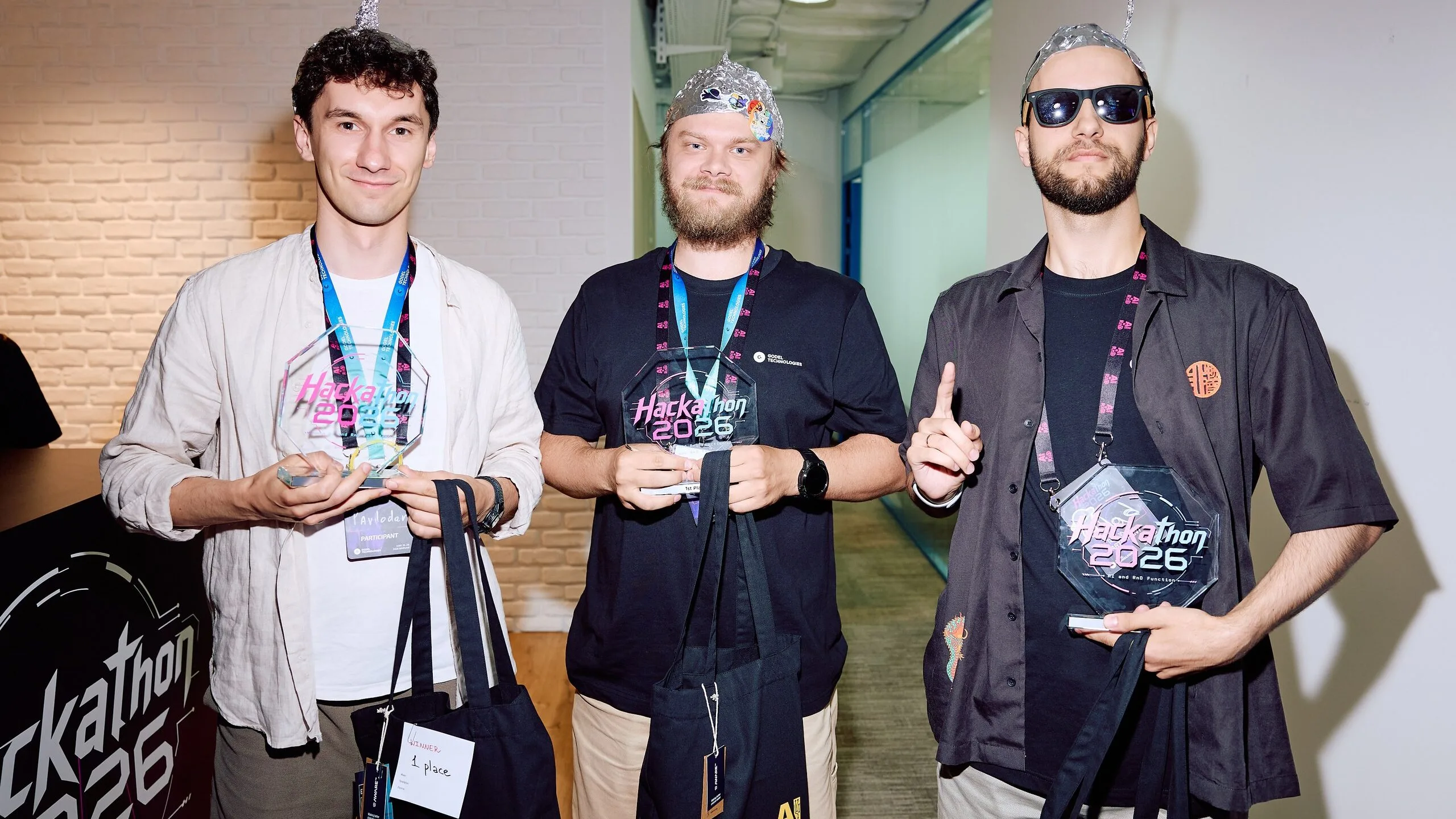
Team 06 – Pavel Charkasau, Pavel Blinets and Uladzislau Harbunou – took first place with a company knowledge assistant that pulls together everything scattered across a project: meeting notes, transcripts, documentation. An LLM sifts through all of it to surface what actually matters – risks flagged on a dashboard, an onboarding page for new team members, and a Q&A system that reports its own confidence level so people know when to double-check an answer. Notably, the team built the system to run on real, production-style data from day one – pulling from sources like a company database, source code, documentation, correspondence and meeting transcripts – rather than relying on simplified mock data.
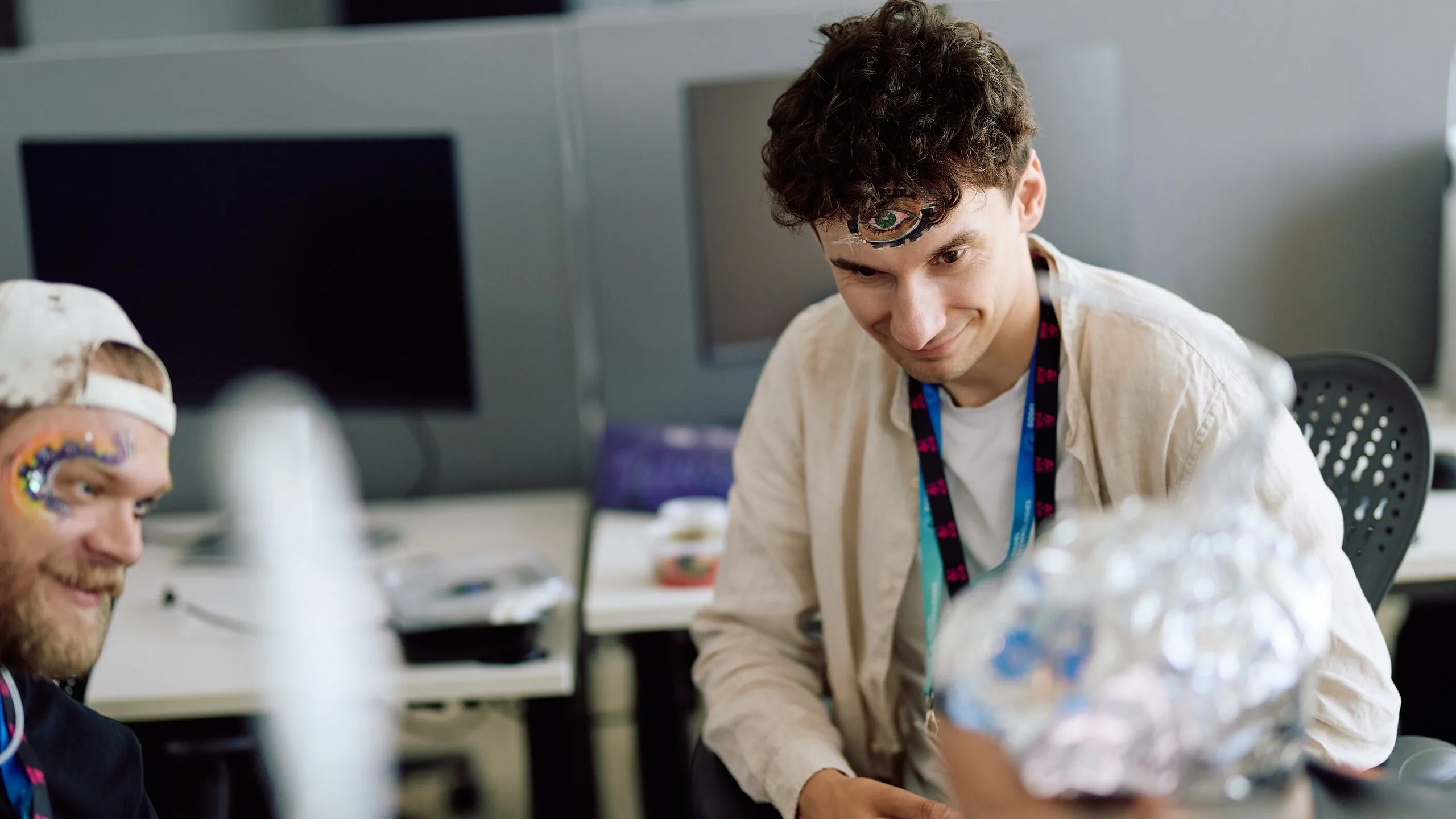
No one was locked into a single role – everyone weighed in across the board – but a few responsibilities stood out clearly. Pavel Charkasau, together with Pavel Blinets, drove the technical build. “Uladzislau owned the presentation – everything people saw in the demo was his,” Pavel Charkasau says. Pavel Blinets confirms it was a genuinely unusual way of working: “Normally on a project, everyone builds their own piece and you stitch it together at the end. Here it wasn’t like that. We’d kick off a Claude session, and it would just keep moving, like a river.” There was no real split – decisions got made together, as a team.
Building the SDLC itself took several rounds of refinement. Uladzislau put together an early, rough version – a working prototype that still needed a lot of technical grounding. Pavel Blinets then did his own research into best practices and used it to turn that rough draft into something solid: “We took Uladzislau’s raw concept and my blueprint for how it should actually work and combined them into a genuinely good SDLC.” Pavel Charkasau added another layer on top, bringing in three independent deep-research results from different AI systems and merging them with the rest. “We kept running our SDLC and our agents back through that whole process, checking it stage by stage, until it held up,” he says.
With three people and three laptops, they needed a way to work in parallel without manually copying tasks between machines – so Pavel Charkasau built an orchestrator that used their GitLab repository as a shared coordination point. The real trick was that each laptop did its own work whenever it was ready to – checking a shared task list to see what the others had already completed, so it knew whether it could move forward. “It’s the same way a real dev team works – backend, frontend, QA, all moving in parallel, then merging their work back together in the right order,” he explains. Hours before the hackathon even started, they also finished a self-optimising agent that would track token usage across the pipeline and fine-tune prompts between runs.
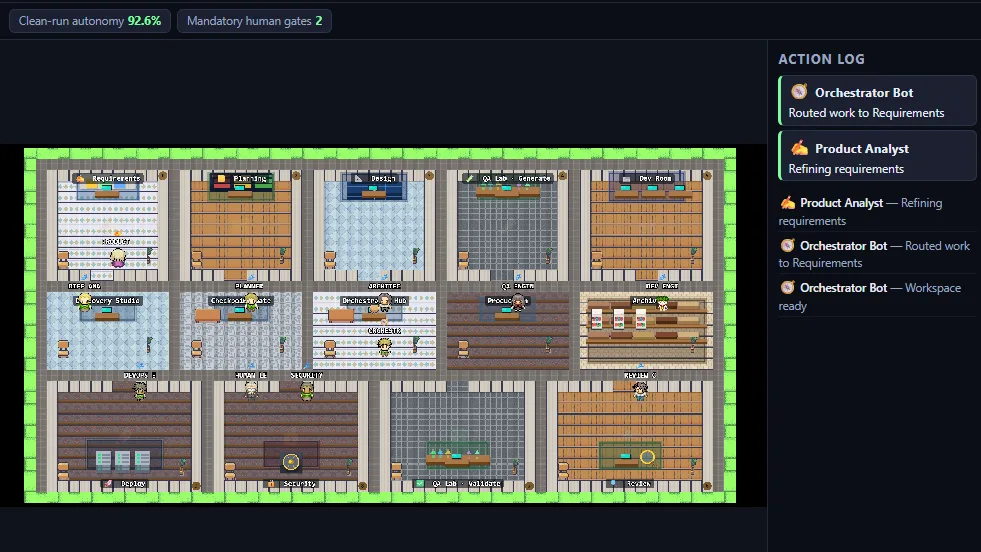
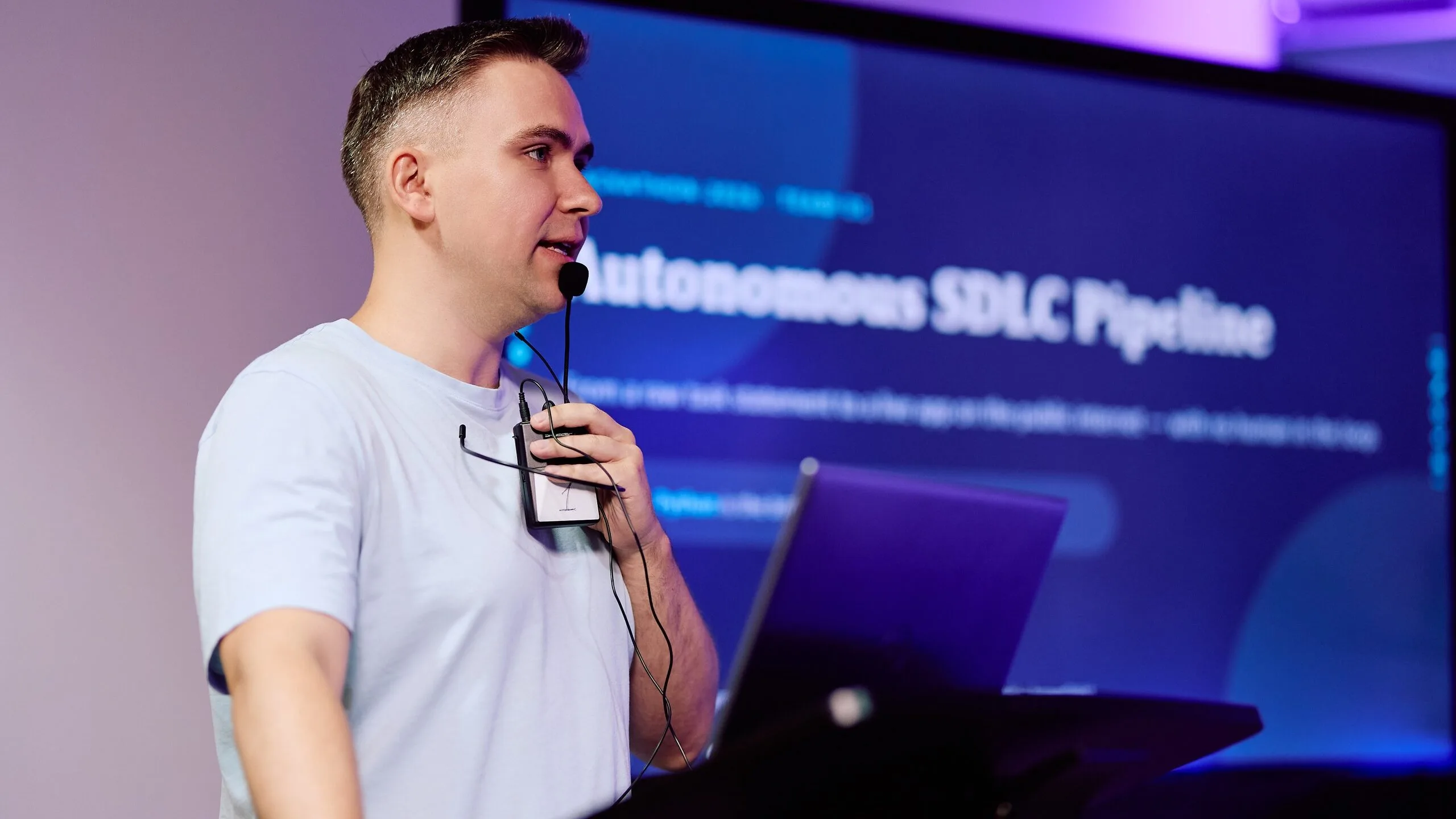
The team’s signature moment was its demo: an interactive visualisation showing their AI agents “talking” to each other as they worked, walking through nine phases of development from requirements to deployment. The idea was entirely Uladzislau ‘s own. “I figured most technical people wouldn’t bother building a visualisation of something they already understand intuitively – so I thought that could be our edge,” he says. “I kept it under wraps until the demo, and it landed exactly the way I’d hoped.”
Asked what made the team click, Pavel Charkasau doesn’t hesitate: “Genuinely the best team I’ve ever worked with. Nobody pulled things their own way – every idea got discussed, not dismissed.” Uladzislau, the only non-technical member, agrees: “I was worried I’d end up as the fifth wheel on a team of engineers. Instead, it turned out to be a perfect balance.”
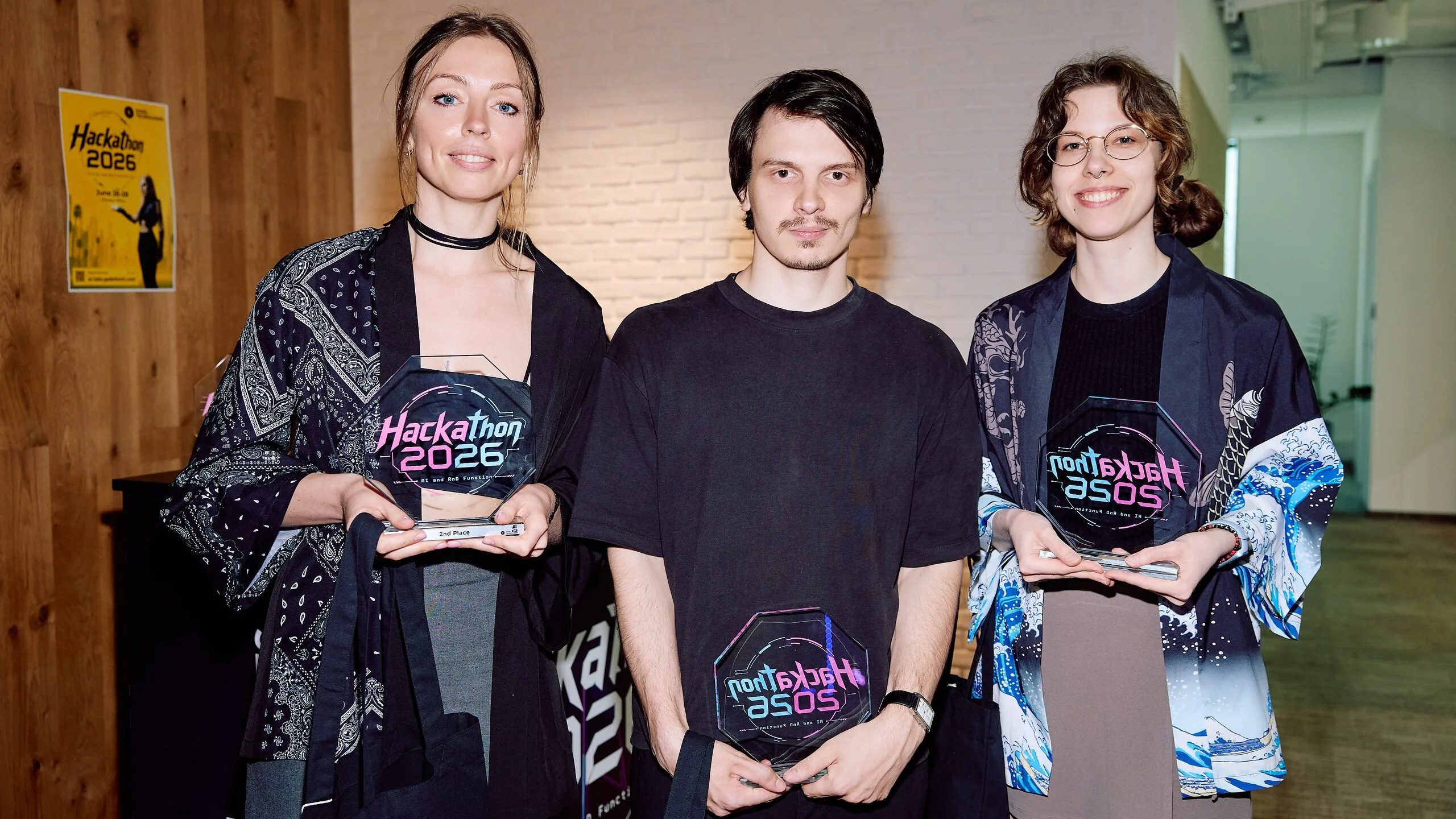
Team Last Ticket to Tycho – led by Ryhor Kanoplich, alongside Yuliya Brechka and Viktoriia Volkova – took its name from Tycho, a lunar city from cyberpunk lore. “We wanted something from the cyberpunk world, but not too obvious,” Ryhor says. Fittingly, the team went last in the demo lineup – a detail that, in hindsight, matched the name a little too well.
Their mission was to build a pre-sales assistant: teams could feed it business documents and sales metrics along with a request, and the system would assess how feasible the idea was, cross-reference relevant research, and recommend how to move forward. What made their solution stand out was how they pushed AI-native tools to their limit. They used Claude Code’s experimental “agent teams” feature to let sub-agents run in parallel – developers, testers and reviewers working simultaneously rather than one after another.
One idea in particular became their calling card: multi-agent debates. When their system’s architect agent hit a genuinely tricky decision, it could summon several other agents – a pragmatist, a proposer, a challenger, a fact-checker – each with a distinct personality, to argue it out and land on the best answer. “Normally that kind of thing is just noise,” Ryhor says. “In this case, it turned out to matter a lot.” The team also gave their agents their own lightweight task-tracking system, separate from the tools humans use, along with a dedicated “human-eye” agent whose only job was making sure the interface actually looked good – since, left alone, models can lose track of visual polish under a long list of instructions.
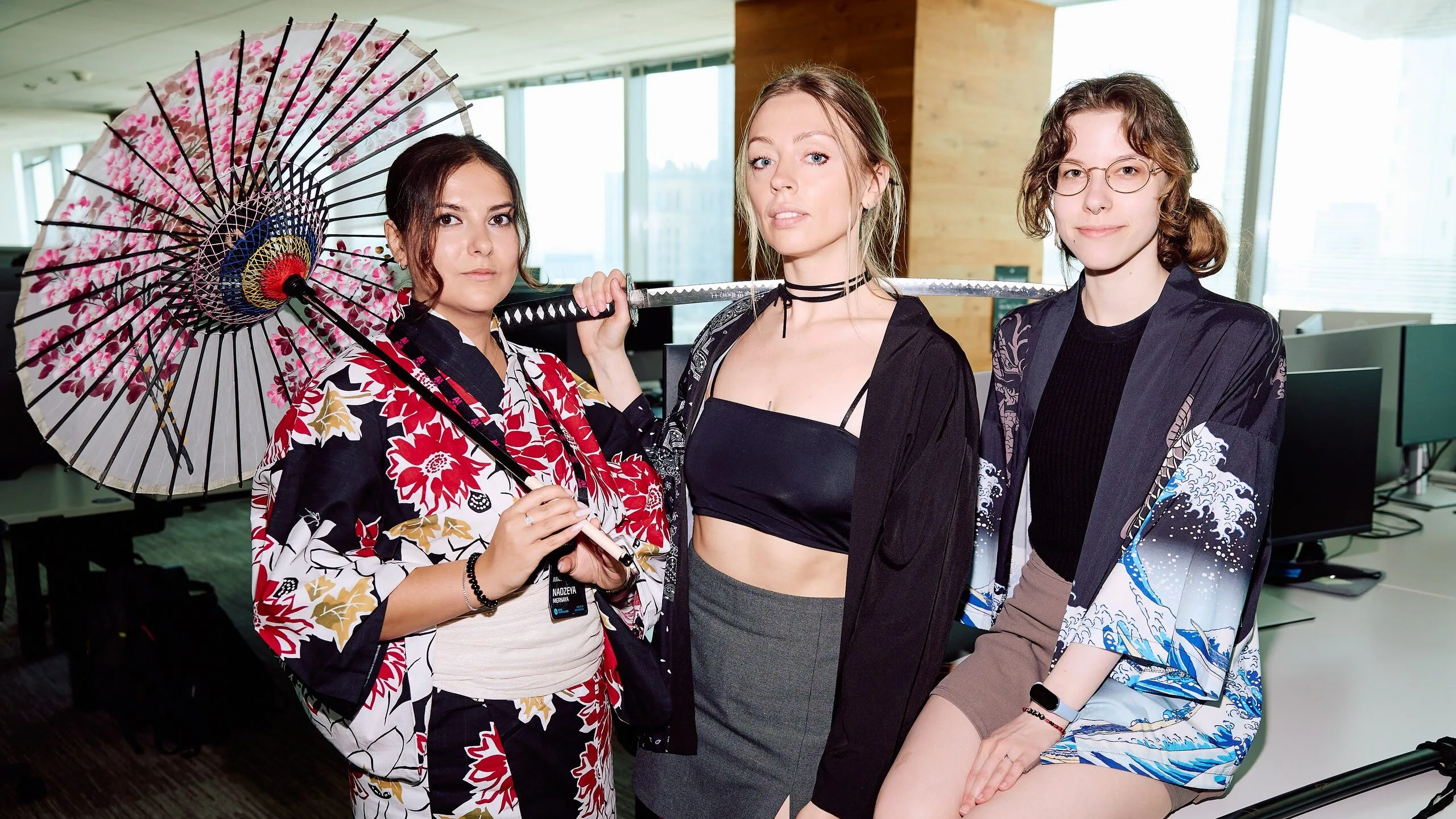
The team leaned fully into the aesthetic, too – the whole team showed up in costume, with a katana as one of the standout props. “In cyberpunk, a katana is a great weapon to fight with others,” Ryhor says simply.
Reflecting on the three days, Ryhor admits the team didn’t expect second place going in – though by the final stretch, their confidence had grown. “We had a working, minimalist solution, and I’d wired in enough outside tools that Claude could genuinely act like a Swiss army knife – browsing, generating video, doing real research.” What stuck with him most, though, was simpler: “It felt like we were building something genuinely great.”
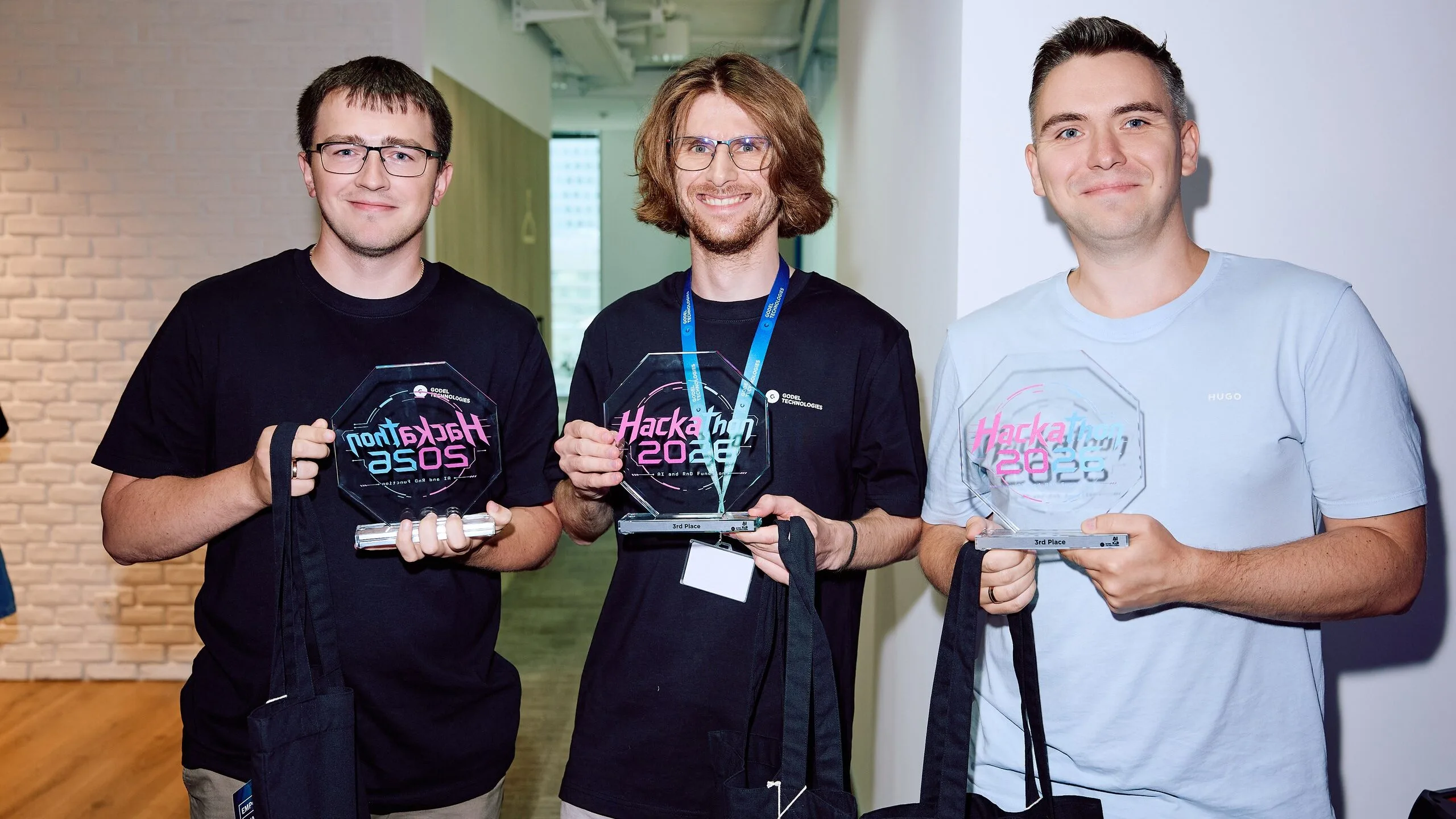
Team 01 – Leonid Demyanchik, Vladyslav Shevkoplias and Aliaksei Bely – had an unusual starting point: Leonid had originally been part of the organising team before deciding, after his role there wound down, to compete instead. “It felt like the right moment,” he says. “I hadn’t been involved in the task design, so why not try it as a participant?” He brought in Aliaksei and Vladyslav, two colleagues he already worked closely with day to day.
Given the same pre-sales assistant mission as Last Ticket to Tycho, the team built a notably deep pipeline – expanding the standard business-analyst-to-developer flow with additional steps like a dedicated UI designer stage and automated UI test runs. “It made the system more complex, but it also gave us more stability,” Aliaksei says. That instinct toward caution ran through the whole build: the team added validation checks after every model output rather than trusting results outright. “We don’t fully trust the models,” Vladyslav explains. “Every answer gets checked before we move to the next stage.”
One of the more memorable moments came almost by accident. Their mission brief happened to include the words “dark” and “cyberpunk” – and without anyone asking for it, the model designed the entire interface around a dark, cyberpunk-inspired palette. “It’s interesting that it picked up on that with nothing more specific to go on,” Aliaksei says. “It also shows how much a model can improvise when you don’t spell things out.” The team liked the result enough to keep it – and carried that same understated confidence into the pitch itself. “We kept the presentation itself pretty light,” Aliaksei notes. “No claims about changing anyone’s life – just a clear walkthrough of what we actually built.”
Looking back, the whole team points to the same open question that ran through the whole event: nobody, themselves included, had a fully settled idea of what a mature agentic SDLC should look like. “That uncertainty was everywhere,” Aliaksei says – “but figuring it out together, comparing notes with other teams, was probably the most valuable part of the whole experience.”


Joe Wolski, CTO

Sr. JavaScript Software Engineer Robert Oleksza
