Siarhei Oshyn, Head of Data / Data & AI Architect

Soft Skills Matrix At Godel: “It’s Not Enough to Be Technically Strong – You Have to Be Heard”

Recently, the Godel People Functions team presented a new version of the Soft Skills Matrix, a tool designed to help employees systematically assess, develop, and apply essential interpersonal abilities. We spoke to Vera Dudochkina, Product Owner and Head of Learning and Development, to understand why soft skills are critical, how the matrix works, and what it means for employees across Godel.
The term “soft skills” was coined by the U.S. Army in the late 1960s. It was created to differentiate between skills related to operating machinery, which they called “hard skills,” and those that involved less tangible, non-technical actions.
The military realised that the success of a mission depended not only on a soldier’s ability to use equipment but also on their interpersonal skills, such as leadership, communication, and teamwork. These were skills that weren’t easily quantified or taught in a traditional, machine-focused training setting. A 1972 U.S. Army training manual formalised the usage of the term.
Soft skills have always been as important as hard skills. Depending on the context, a person, a team, or a task. It might seem like technical skills matter more, but the reality is that work never happens in isolation; it always involves other people, colleagues, stakeholders, or clients. People are complex. We’re all different, and we see the world differently. That’s why communication is the key. Misunderstandings can easily happen, and we need soft skills to navigate those situations.

On top of that, the world is changing rapidly. Businesses face more complex challenges, and we need to think critically, make decisions, solve problems, and sometimes take a strategic view. All of this requires soft skills, and these skills don’t just come naturally. They take the effort to learn and apply.
Even if you’re a brilliant developer with an amazing idea, it won’t go anywhere unless you know how to present and justify it. If stakeholders or your team can’t understand and support your solution, your technical expertise may go unused. So, it’s always a mix. Hard skills show what you do, soft skills show how you do it. Therefore, they both matter.
There are many, and it really depends on the project, client, and context. No one can be great at every soft skill at once. You have to focus based on your role and priorities. That’s exactly why we created the Soft Skills Matrix: to help employees identify and develop what’s most relevant to them.
At Godel, teamwork is incredibly important, especially because we often join integrated client teams. You become part of another company’s environment, work with people from different cultures, and need to blend into their way of working. That’s not always easy, so therefore, teamwork is the key.
Another essential area is communication. How you express your ideas, manage expectations, explain technical solutions, and participate in meetings all affect how well your work is understood and valued.

It’s a framework that outlines performance expectations. Hard skills explain what you’re doing; soft skills define how you’re doing it. The matrix helps people understand how their behaviour and approach impact their work and team dynamics.
When I joined the company in 2021, we had a position ranking system used by most delivery divisions. It categorised employees into levels like junior, middle, senior, lead and principal in delivery divisions. That was our first attempt at creating something like a Soft Skills Matrix. It was a great start – we could call it an MVP.
However, the company grew, we gained new clients and projects, and the industry changed. It became clear that the original version no longer reflected our needs. It had served its purpose, but it needed a stronger, more scalable structure. The new matrix is a more mature, effective tool for long-term growth.
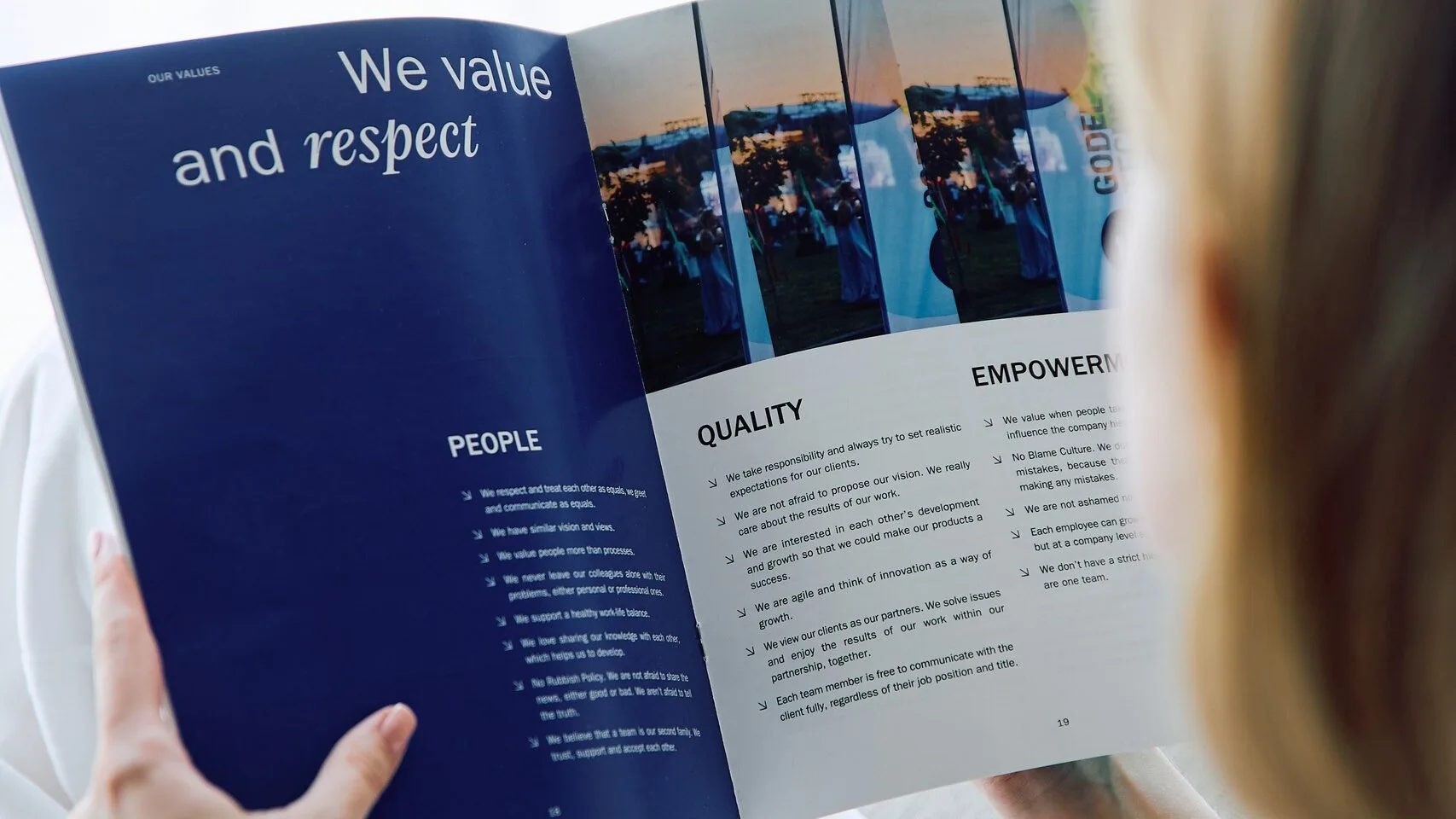
Absolutely. Soft skills and values are both about human behaviour. Aligning the matrix with our values helps reinforce and bring them to life. Take “Quality,” for example, one of Godel’s core values. We want to be known for delivering high-quality services, and our clients recognise us for that. So, we included “adherence to quality” as a soft skill in the matrix. It shows how values can be turned into specific, observable behaviours.
The assessment is a starting point, and it helps you understand where you are and where to go next.
We expect employees to be proactive and take ownership of their development, which starts with self-reflection as a foundational step in personal growth. It is a key component of self-awareness, which is a soft skill in and of itself. By taking the time to think about your actions, motivations, and experiences, you can gain a clearer picture of your soft skills in practice. To make self-reflection a powerful assessment tool, you can use several techniques:
But assessment is also the responsibility of the Talent Mentor, who gathers feedback, which is one of the most effective ways to assess your soft skills. Feedback gives you a perspective, and often, it highlights areas you didn’t realise needed work, or strengths you hadn’t noticed.
You get a clearer picture of your strengths and areas for improvement, and the best approach to development isn’t fixing every weakness; it’s about maximising your strengths. We all have flaws, and trying to be perfect is unrealistic. Instead, focus on areas where you already have talent and find ways to use that more effectively. Of course, if there’s a specific weakness that blocks your progress, it makes sense to work on it, but professional growth comes mainly from building on your strong points, which is how your potential is realised.
Soft skills can be developed throughout your whole life. They’re highly situational, meaning what works with one person may not work with another. You might resolve one conflict effectively but face a new one that challenges you in a completely different way. Psychologists say developing soft skills is more challenging than building hard skills. It’s about changing behaviour, which takes time and effort, and just like physical muscles, soft skills can fade if you don’t use them regularly.
You need both theory and practice. Learn the basic models and techniques, then start applying them consistently until they become your second nature, what we call unconscious competence. That’s when the skill feels natural and automatic. There are many ways to get started, like taking courses, reading books, watching videos, or listening to podcasts. Then, start practising in real situations. Observe what works and what doesn’t. Reflect, adjust, and keep going. Ask for feedback, how others see you can be very different from how you see yourself, and both views matter. That kind of reflection is crucial for long-term growth.
At Godel, we see the benefits of having supported our employees in developing their soft skills, so we have dedicated resources and a budget to continue to support this. The Soft Skills Matrix is part of that effort; it gives employees a clear benchmark and direction for growth. If you don’t know what’s expected of you, you won’t know where to head. The matrix makes those expectations visible. Each skill has four levels, starting from “no capability” and progressing upward. That lets you track your progress and see your development potential.
Talent Mentors play a central role, and they support employees across all areas: hard skills, soft skills, leadership, and more. They help set goals, create action plans, and connect people with resources and guidance for professional growth. We also run various training programs, including leadership courses, which naturally involve soft skill development. Since launching the new matrix, we’re also building a list of free resources for each skill to help everyone take practical steps in their development journey.


Siarhei Oshyn, Head of Data / Data & AI Architect

Valdemaras Girštautas, Jr, JavaScript Software Engineer