Siarhei Oshyn, Head of Data / Data & AI Architect

First steps to be a Solution Architect in Godel


Why are Solution Architects so important on the project? What value do they bring in providing a reliable service to Godel’s partners? Siarhei Oshyn, Head of Data and Valiantsin Shkvarko, Data Architect answer these questions as they explore the first steps to be a Solution Architect in Godel.
SO: Godel Technologies has wide experience in software development. One of the key things that Godel understood a long time ago is that Solution Architects (SA) play a critical role in shaping the technical direction of a project. By providing the blueprint for how various technologies and systems integrate and work together, the SA ensures that the project aligns with both the business objectives and the technical requirements. From the early stages of understanding business needs to designing scalable and efficient systems, the SA ensures that all stakeholders are on the same page, minimising miscommunication and risk.
This oversight is crucial for maintaining the quality, security, and performance of the final product. Without a skilled Solution Architect, a project may face significant challenges related to system incompatibilities, poor scalability, or excessive costs, which can derail timelines and impact the business negatively.
VS: Shortly, please, read our article about Data Consultancy
SO: Solution Architects bring huge value to businesses by acting as a bridge between business goals and technical execution. Their ability to design robust, future-proof architectures not only ensures that the project meets the immediate business needs but also lays the groundwork for sustainable growth. They focus on optimizing systems for both current and future demands, ensuring that scalability, security, and maintainability are prioritised.
By collaborating closely with clients, developers, and other stakeholders, Solution Architects can identify potential issues, bottlenecks early and mitigate risks. Their involvement can lead to more efficient resource utilisation, reduced operational costs, and the delivery of higher-quality products, directly enhancing the business’s competitiveness and market responsiveness.
VS: Everything that Siarhei said earlier about the value an architect brings to a business is absolutely true. Architects play a crucial role in aligning technical solutions with business goals, ensuring scalability, and mitigating risks.
And there’s something else.
The word “architecture” or “architect” often sounds solid, important—and even expensive. After all, an architect’s decisions directly impact budgets, costs, and ultimately, profits. There’s also a common stereotype: the architect is someone locked away in an ivory tower, distant from real business challenges. Some might even hesitate to approach them for advice.
But in reality, architecture is not just about technology. It’s primarily about communication. A good architect ensures that different parts of the business work smoothly together, eliminating misalignment and bridging gaps between teams.
The real value of an architect isn’t just in technical decisions but in creating a shared understanding among all project stakeholders. They bring together business drivers, requirements, constraints, and expectations. When they do their job well, the team eventually reaches a moment where everything just clicks:
– “Oh, so this is what we were trying to build!”
– “Yes, now it actually makes sense!”
– “But why did we even need an architect if everything was clear all along?!!”
This reaction might seem ironic, but it’s the ultimate sign of success—when the team moves forward with confidence, knowing exactly where they are going, how they’ll get there, and what they need to do.
SO: It is great when you have already a well-prepared Solution Architect for a new project, but for the less senior Engineers, Godel has a journey on how to become a Solution Architect: The first steps are familiar with the Solution Architect skills matrix, responsibilities, expectations and passing “Introduction to Software Architecture” course.
VS: Let’s consider our “Introduction to Software Architecture” course.
The transition from a senior engineer to an architect is not just about gaining more technical knowledge—it’s about developing a broader perspective, learning to analyse trade-offs, and mastering communication with stakeholders. That’s exactly what our course is designed to help with.
The course title sounds simple and perhaps even a bit dry: “Introduction to Software Architecture.” However, its main goal is to set the right expectations for participants.
We don’t promise that after completing this course, you’ll immediately become a certified architect. In fact, for some experienced Engineers, much of the content might seem obvious. Many participants are already Senior and Lead Engineers, working on complex, large-scale projects. Naturally, they might wonder: “Why spend time on such basic things?”
But in reality, even seasoned professionals often have gaps in foundational architectural knowledge.
Most of us enter architecture from a technical background. At a certain point, it might feel like we already know everything. But the truth is, architecture is about continuous learning, questioning, and evolving.
Our course is not long, but it’s packed with essential knowledge. Yes, some parts might seem theoretical, but we balance that with real-world examples to show how these concepts apply in practice.
The practical part of the course is especially valuable. This is where participants work hands-on to design architectural solutions, and it’s often at this stage that they realise why the earlier lessons were so important.
So, if you’re ready to take your first steps into the fascinating, challenging, and rewarding world of software architecture—welcome to the course!
VS: Of course, we had our doubts about how our idea would be received by the toughest audience—our own Engineers.)
Getting feedback from them is no easy task, but when we finally did, we could breathe a sigh of relief. We didn’t get dramatic reviews like “This course changed my life! I’ll never be the same! A must-recommend!” And honestly, that’s a good thing. That’s not what we were aiming for.
What we were aiming for was self-awareness—recognising and acknowledging knowledge gaps. And that’s exactly what we saw in the feedback.
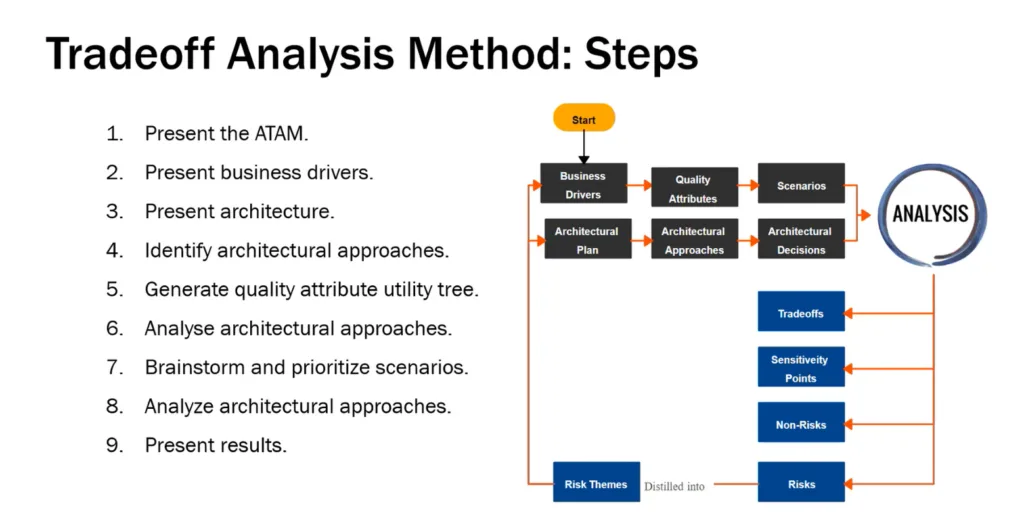
Many experienced Engineers came onto the course confident they were already applying architectural principles in their work. But as they progressed, they realised that more often than not, they had been relying on intuition rather than structured knowledge.
The KATA practical sessions were a big hit. And here, a special thanks goes to Artjoms Ladiks —he was the one who got us hooked on this format.
But Engineers will be engineers: more practice, more cutting-edge tech, more…
Overall, the main takeaway is clear: The course helped participants connect their existing experience with structured architectural thinking. And that’s exactly what we were aiming for.
SO: Becoming a skilled Solution Architect is not an overnight achievement—it’s a long and challenging journey. At Godel Technologies, we understand that growth in this role requires a mix of technical expertise, strategic thinking, and strong communication skills. As we’ve seen throughout this article, Solution Architects are required to ensure that projects align with business goals, maintain quality, and scale efficiently. They are the linchpins that bridge technical complexities and business needs, enabling teams to deliver high-quality, scalable solutions that drive success.
However, it’s important to recognise that the path to becoming a proficient Solution Architect is demanding. The transition from a Senior Engineer to an Architect is a significant shift in mindset, requiring technical knowledge and the ability to manage trade-offs, communicate effectively with stakeholders, and make decisions with a broader business perspective. This growth is nurtured through continuous learning and practice, as exemplified by our “Introduction to Software Architecture” course, which helps Engineers close the gap between intuition and structured architectural thinking. At Godel, we believe that the journey to becoming a great Solution Architect is one of continuous improvement and learning. It’s a challenging path, but the reward is the ability to lead complex projects, foster collaboration across teams, and ultimately, contribute to the business’s long-term success.


Siarhei Oshyn, Head of Data / Data & AI Architect

Valdemaras Girštautas, Jr, JavaScript Software Engineer