
AI Insights
Humanoid Robots: From Concept to Reality
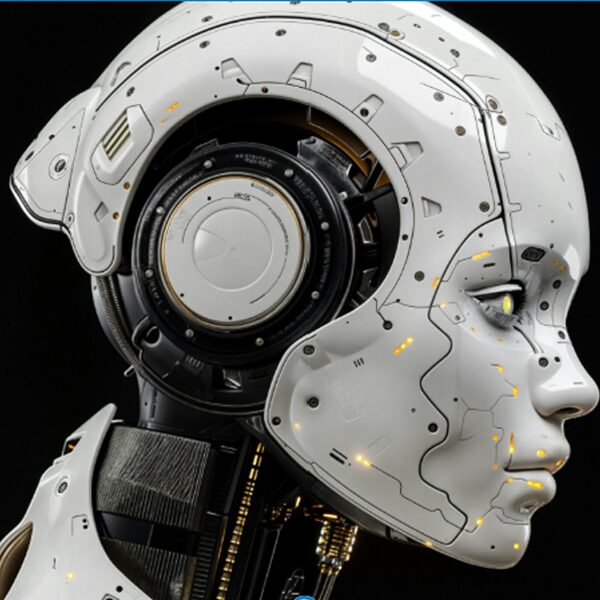

We are currently witnessing an era in robotics marked by the rapid emergence of human-shaped robots. High-profile prototypes, such as Boston Dynamics’ new all-electric Atlas or Figure AI’s Figure 02, are capturing public attention and moving from lab videos to factory floors.
These machines, known as humanoid robots, are designed to resemble the human body for a highly practical purpose. This design enables them to operate effectively in environments built for humans, allowing them to navigate existing spaces and use standard human tools. Unlike specialised industrial robots, humanoids have remarkable versatility and adaptability, capable of performing a vast number of functions rather than being limited to one specific task.
That said, it’s important to remember that many current humanoid prototypes are still in the learning phase and have limited practical applications. Although they can perform basic tasks such as lifting, carrying, and using tools, they remain far from matching human flexibility and adaptability.
What’s Driving This Revolution
The accelerating progress in humanoid robotics is a result of several complementary trends. One factor is advanced sensors and computing: the availability of sophisticated yet affordable sensors – such as cameras, depth sensors, and inertial measurement units (IMUs) – allows robots to “see” and maintain stability in real time. Additionally, breakthroughs in artificial intelligence have revolutionised how robots perceive and learn. Enhanced perception models enable robots to understand objects and situations; large-scale reinforcement learning techniques significantly expand their capabilities.
From Sensing to Action
To understand how these advances translate into practical capabilities, we can examine how humanoid robots operate. Broadly, the process mirrors human interaction with the world and can be broken into the following stages:
- Perception: Humanoid robots are equipped with a range of sensors – including cameras for visual input, microphones for sound, and specialised sensors for touch, distance, and orientation – that continuously stream raw data about their surroundings and internal state. This sensory input is then processed by AI models to build a meaningful understanding of the environment. The system recognises objects, interprets their properties and assesses the overall scene, transforming raw data into coherent, actionable information.
- Planning: Based on its perception, the robot decides on a course of action to achieve a specific goal. This stage involves breaking down complex objectives into smaller, executable steps and planning safe paths while maintaining balance and avoiding collisions.
- Action: Finally, the robot’s motors, known as actuators, execute the planned movements. These movements are controlled by real-time feedback loops that can adjust hundreds of times per second, ensuring smooth and responsive motion and maintaining balance, which is especially critical for bipedal movement.
How Humanoid Robots Learn
Unlike earlier robots that required extensive, hand-coded instructions for every movement, modern humanoids are taught through sophisticated AI-driven learning techniques such as reinforcement learning (trial-and-error) and imitation learning (learning from demonstrations).
The learning process involves training robots in simulations where their digital twins – virtual copies of physical robots – can practice tasks and fall down and get up again in a risk-free environment. This enables accelerated learning and skill development while keeping the physical robot safe.
Practical Applications
Despite the exciting advancements, household humanoid helpers from science fiction are not yet ready for widespread deployment in our homes. Instead, the initial deployments of these advanced humanoids are primarily occurring in more structured and controlled environments.
- Factories and warehouses: These industrial settings are ideal for early adoption. For example, Agility Robotics’ bipedal robot, Digit, is designed for logistics and moves items in warehouses. Similarly, Figure AI has entered a partnership with BMW to deploy its humanoids in automotive manufacturing facilities. These robots handle repetitive, physically demanding tasks in human-oriented spaces.
- People-facing assistance: Even though they are still largely in developmental stages or early demos, humanoids have potential in areas such as reception, basic home help, elder care, and education.
- Hazardous environments: Humanoid robots are also being developed for high-risk environments – hot, toxic, radioactive, or explosive – where they can help protect human life.
These current applications are largely tightly supervised pilot projects, marking a significant shift from one-off demonstrations to continuous, practical work.
Challenges and Limitations
Despite the rapid progress, several significant hurdles must be overcome before humanoids become commonplace.
Creating an advanced humanoid robot is an exceptionally complex and time-intensive undertaking, requiring immense effort and resources. Critical challenges include high development and hardware costs, limited battery life, ensuring safety during human-robot interactions, and integrating multiple systems into reliable, predictable behaviours. Ongoing innovation, improved regulatory frameworks, extensive interdisciplinary collaboration, and public acceptance are required.
Consequently, despite impressive prototypes, the technological maturity of humanoid robots remains in the early stages, with widespread adoption and reliable performance potentially taking years to reach full productivity.
The Future Outlook
The path to widespread adoption of humanoid robots is still long. However, the trajectory feels increasingly inevitable. As production scales up, costs will decrease, enabling broader deployment. The timeline is the key question: scaling up will likely take years, depending on demand and breakthroughs in manufacturing.
As we watch the first commercial deployments of humanoid robots, we’re witnessing the early stages of what could be one of the most significant technological transformations of our time.
Key References
NVIDIA. What is a humanoid robot? NVIDIA Glossary. https://www.nvidia.com/en-us/glossary/humanoid-robot/
IEEE Spectrum. https://spectrum.ieee.org/ai-robots
CS-STEM Network. Sense, Perceive, Plan, Act. https://www.cs2n.org/u/mp/badge_pages/912
Brandom, Russell. (2025, June 11). 2025 is the year of the humanoid robot factory worker. Wired. https://www.wired.com/story/2025-year-of-the-humanoid-robot-factory-worker/
Marina Shymchuk, Lead Business Analyst
Posted 14 Aug 2025


Read more AI Insights
-

-
Learn more
Godel accelerating digital delivery with Awaze ahead of peak demand
-
Lead Java Software Engineer, Siarhei Dvaradkin
Learn moreChange Propagation: SDD’s Central Unsolved Challenge
-
Siarhei Oshyn, Head of Data / Data & AI Architect
Learn moreWhat LLM will be the best choice for your business?
-
Valdemaras Girštautas, Jr, JavaScript Software Engineer
Learn morePrompt Context Types: Key Experimental Findings
-
Learn more
Godel helps Welbeck Health turn AI ambition into action